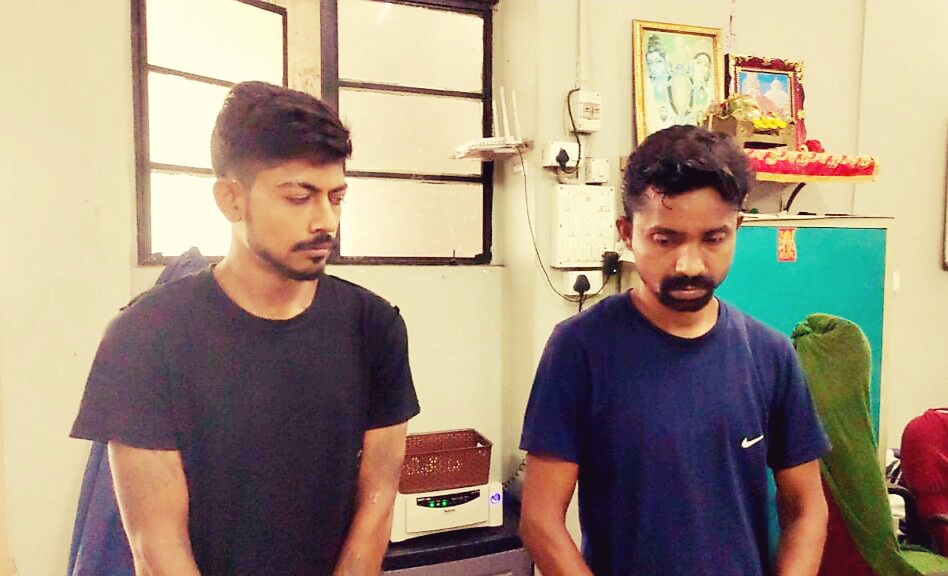
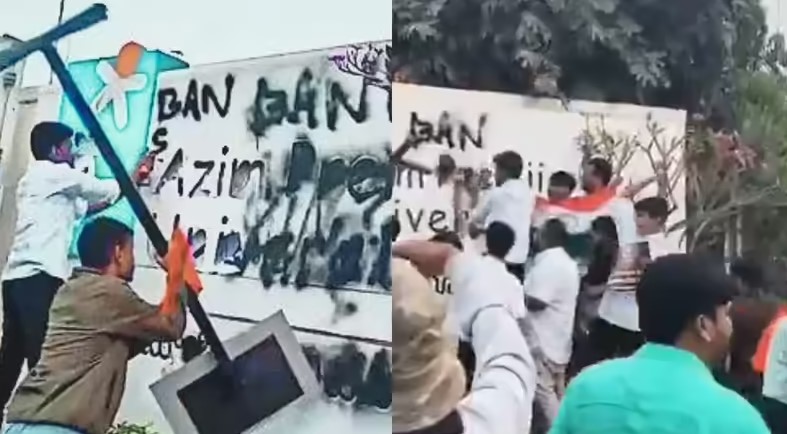
A major controversy broke out at a prominent educational institution on February 25, 2026, after a seminar discussing recent events in Kashmir triggered intense protests from student groups and local activists. The unrest began when clips from a guest lecture started circulating on social media, with critics alleging that the speaker expressed “anti-national views” that questioned India’s sovereignty and criticized the role of security forces in the region. Within hours, large groups gathered outside the university gates, chanting slogans and demanding the immediate suspension of the faculty members involved in organizing the event. The protesters argued that academic freedom should not be used as a shield to propagate narratives that hurt national sentiments or demoralize the armed forces stationed in sensitive border areas.
The university administration quickly moved into damage control mode, issuing a statement that they are currently reviewing the unedited footage of the talk to determine if any code of conduct was breached. While the university reiterated its commitment to being a space for diverse perspectives and intellectual debate, it emphasized that it does not endorse views that challenge the constitutional integrity of the country. Security across the campus was significantly tightened as local police arrived to prevent any physical altercations between opposing student factions. Preliminary reports suggest that the seminar was intended to be an academic analysis of the socio-economic changes in the valley following recent policy shifts, but the discourse allegedly veered into sensitive political territory that ignited the current standoff.
As the situation remains tense, several political leaders have weighed in on the incident, calling for a high-level probe into the credentials of the invited speakers and the vetting process for such seminars. Supporters of the event, however, argue that the outcry is an attempt to stifle academic inquiry and suppress critical thinking on complex geopolitical issues. They maintain that discussing the ground realities of Kashmir is essential for a healthy democracy and should not be automatically labeled as “anti-national.” The local education department has requested a detailed report from the institution’s vice-chancellor, and further academic activities at the venue have been suspended until the atmosphere returns to normalcy and the investigation is concluded.