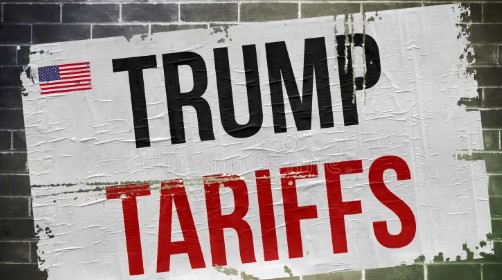
In a surprising turn for global markets, President Donald Trump’s latest round of global tariffs officially took effect today, February 24, 2026, at a rate of 10%—notably lower than the 15% figure he had threatened over the weekend. The implementation follows a chaotic few days for U.S. trade policy, sparked by a landmark Supreme Court ruling on Friday that struck down the administration’s previous “reciprocal tariffs” under the International Emergency Economic Powers Act (IEEPA). While the President reacted to that legal defeat by vowing to hike duties to the maximum 15% allowed under a different statute, the actual rollout at the 10% level has provided a momentary sense of relief for international trading partners.
The new duties are being enforced under Section 122 of the Trade Act of 1974, a provision that allows the president to impose temporary import surcharges to address “balance-of-payments” deficits. Unlike the previous permanent measures, these tariffs are legally capped at 150 days unless the administration secures explicit approval from Congress. By opting for 10% initially, the White House appears to be maintaining a baseline of protectionism while leaving the door open for future escalations. However, the U.S. Customs and Border Protection (CBP) confirmed that the 10% “ad valorem” duty applies to almost all imported articles, except for specific exemptions like critical minerals, pharmaceuticals, and goods covered under the USMCA with Canada and Mexico.
Business groups and international allies have responded with cautious optimism, though many remain wary of the President’s unpredictable “policy by social media.” The British Chambers of Commerce noted that while the 10% rate is a reprieve from the feared 15%, the constant fluctuation makes long-term planning nearly impossible for exporters. Economists suggest that the lower-than-expected rate may be a tactical move to gauge the impact on domestic inflation, which had already begun to creep upward under the previous tariff regime. With the Supreme Court having already signaled its willingness to rein in executive overreach, the administration may be moving more carefully to ensure this new legal justification holds up under the inevitable judicial challenges.
As of today, the effective average U.S. tariff rate is estimated to sit near 13.7%, a significant jump from pre-2025 levels but lower than the peak seen last year. For now, the global trade community is breathing a sigh of relief that the worst-case scenario was avoided, but all eyes remain on the White House to see if the promised 15% “ceiling” will be reached before the 150-day window expires this summer.