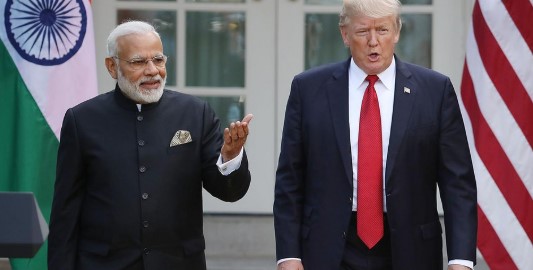
In a significant diplomatic move marking a new chapter in Middle East mediation, India has officially participated in the inaugural meeting of the Gaza Peace Board, a high-level initiative convened by U.S. President Donald Trump. Represented by National Security Advisor Ajit Doval and a senior delegation from the Ministry of External Affairs, India’s presence at the summit highlights its growing role as a strategic mediator and a “Vishwa Bandhu” (friend of the world). The meeting, held at the White House, brought together key regional players, including representatives from Israel, Egypt, Jordan, and several Gulf nations, to draft a comprehensive roadmap for the reconstruction of Gaza and the establishment of long-term security corridors. President Trump, emphasizing his “deal-making” approach to foreign policy, reportedly urged the board to move beyond traditional diplomatic stalemates and focus on economic integration and a “hard-security” framework to prevent the resurgence of conflict.
India’s participation is seen as a delicate balancing act, reflecting its deep strategic ties with Israel alongside its historical support for a two-state solution and its increasing humanitarian commitments in the Palestinian territories. During the deliberations, the Indian delegation emphasized the need for a sustainable “humanitarian-first” approach, offering to contribute India’s expertise in digital infrastructure, medical aid, and large-scale housing reconstruction once a permanent ceasefire is solidified. Indian officials noted that stability in the Gaza Strip is not just a regional necessity but a global one, as continued volatility in the Middle East directly impacts global energy prices and maritime trade routes vital to the Indian economy. By joining this board, New Delhi is positioning itself as a bridge between the Western-led peace initiatives and the Global South, ensuring that the eventual reconstruction of Gaza is inclusive and transparent.
The inaugural meet of the Gaza Peace Board also signals a shift in U.S. foreign policy under the Trump administration, which appears to be prioritizing direct, multi-lateral negotiations involving non-traditional regional partners like India to guarantee the “enforceability” of peace. While the specifics of the proposed peace plan remain under wraps, the board discussed the creation of an international fund for Gaza’s rebuilding, managed by a coalition of the participating nations. For India, this involvement reinforces its status as a major global power capable of contributing to the resolution of the world’s most complex geopolitical crises. As the board prepares for its next round of talks, the international community is watching closely to see if this new alignment of powers can succeed where decades of traditional diplomacy have struggled, with India playing a pivotal role in shaping the final architecture of a stable and peaceful Middle East.