
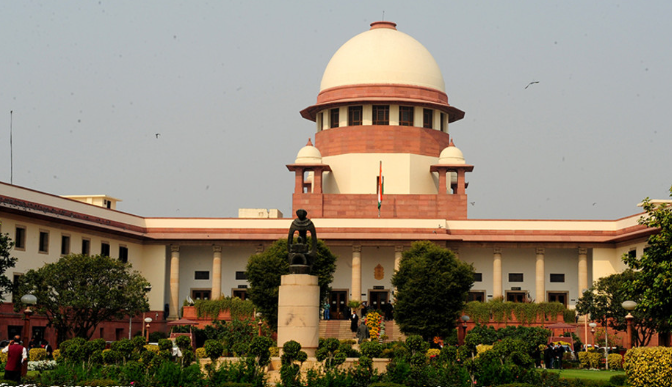
The Supreme Court of India is set to commence the final hearing on a batch of petitions challenging the constitutional validity of the Citizenship Amendment Act from May 5, 2026, marking a crucial stage in one of the most significant legal battles in recent years. The petitions, filed by political leaders, civil society groups, and individuals, question the legality and constitutional soundness of the Act, which was passed by Parliament in December 2019 and subsequently sparked widespread debate and protests across the country.
The Citizenship Amendment Act seeks to provide a fast-track route to Indian citizenship for non-Muslim migrants belonging to Hindu, Sikh, Buddhist, Jain, Parsi, and Christian communities who entered India from Pakistan, Bangladesh, and Afghanistan before December 31, 2014. Petitioners have argued that the law violates the fundamental right to equality enshrined in the Constitution by introducing religion as a criterion for citizenship. They contend that such classification is arbitrary and discriminatory, and therefore inconsistent with the secular principles forming part of the Constitution’s basic structure.
On the other hand, the Union government has defended the legislation, maintaining that it is a narrowly tailored humanitarian measure intended to protect persecuted minorities from neighboring countries where Islam is the state religion. The government has argued that the Act does not take away anyone’s citizenship and instead provides relief to specific groups who have historically faced religious persecution. It has further submitted that Parliament has the sovereign authority to legislate on matters of citizenship and that the classification under the Act is reasonable and based on intelligible differentia.
The upcoming hearings are expected to involve detailed constitutional arguments, including interpretations of Articles 14 and 21, the scope of judicial review, and the balance between legislative intent and constitutional safeguards. Legal experts anticipate that a Constitution Bench may examine whether the Act withstands the tests of equality, secularism, and non-arbitrariness. Given the complexity and volume of petitions clubbed together, proceedings are likely to extend over several days or weeks.
The issue has remained legally pending for years, with interim applications and procedural matters being addressed periodically. The announcement of a definitive hearing date signals that the apex court is prepared to move toward a substantive adjudication. The verdict, whenever delivered, is expected to have far-reaching implications not only for citizenship law but also for the broader interpretation of constitutional principles in India. As the date approaches, political and public attention is once again turning to the courtroom, where the final word on the contentious law will ultimately be decided.