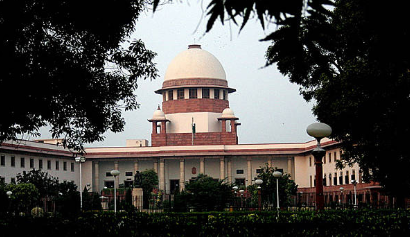
In a significant judicial intervention on February 10, 2026, the Supreme Court of India directed the Central Government to launch a nationwide investigation into whether the alarming number of child disappearances is the work of organized criminal syndicates. A bench comprising Justices B.V. Nagarathna and Ujjal Bhuyan asserted that the sheer volume of cases across multiple states indicates a coordinated pattern of trafficking rather than isolated incidents. To move beyond mere data collection, the court suggested that law enforcement agencies conduct professional interviews with rescued minors to extract intelligence regarding the networks responsible for their abduction and exploitation. This shift toward pattern-based intelligence gathering is seen as a vital step in unmasking the professional rings that currently operate across state borders with relative impunity.
The court’s directive also exposed a major breakdown in administrative coordination, specifically criticizing several states for their failure to provide comprehensive data on missing children. During the proceedings, Additional Solicitor General Aishwarya Bhati noted that while some regions have complied, nearly a dozen states remain non-responsive. The bench warned of “harsh orders” against these delinquent states, emphasizing that an interstate trafficking route cannot be dismantled without unified and transparent data. To streamline this process, the court ordered the Union Home Ministry to appoint a dedicated nodal officer tasked with managing the Mission Vatsalya portal, ensuring that the information gathered leads directly to the identification and prosecution of traffickers.
This legal action stems from a Public Interest Litigation (PIL) filed by the NGO Guria Swayam Sevi Sansthan, which highlighted the disconnect between state police forces and the vulnerability of untraced minors. The Supreme Court is now pushing for a more proactive “Standard Operating Procedure” that prioritizes the recovery of children during the critical early hours of their disappearance. By mandating a synchronized national response, the judiciary aims to replace reactive policing with a systematic crackdown on trafficking machinery. Ultimately, the probe seeks to uphold the fundamental rights of India’s children by forcing an accountable and professional investigation into one of the country’s most pressing social crises.